Design Process

Discover

Define

Ideate

Deliver

It is a mobile web application that encourages users to explore
Brisbane's public art collection through self-guided tours. The
target audience for Brisbane Odyssey is people with two distinct
characteristics. They are interested in learning about public art
displays, and they enjoy walking or physically exploring different
locations within the Brisbane City Council area.
The technology I used: Figma,
HTML, CSS, JavaScript, Adobe Photoshop, Adobe Illustrator
Role: UI Designer and Front-end
developer
Despite the abundance of public art scattered across Brisbane, there exists a disconnect between these cultural assets and the residents and visitors who may not be aware of their existence or significance. Moreover, while some individuals express interest in exploring public art, they often lack a structured means to do so. Traditional methods of exploration, such as guided tours or online resources, may not cater to the dynamic preferences of modern audiences who seek interactive and personalized experiences.
people who are both interested in learning about public art displays and enjoy physically exploring the different places in Brisbane City Council areas.
To dig into research for the problem identification, our team conducted interview 20 target audiences regarding to their experience of explore Brisbane's public art displays, we identified the following pain points:
Lack of awareness: Many residents and visitors are unaware of the breadth and depth of Brisbane's public art collection.
Absence of structured exploration: Individuals interested in public art lack convenient, engaging, and organized ways to explore these displays at their own pace.
Limited engagement opportunities: Existing platforms fail to capitalize on the potential for gamification and interactive challenges to enhance user engagement and retention.
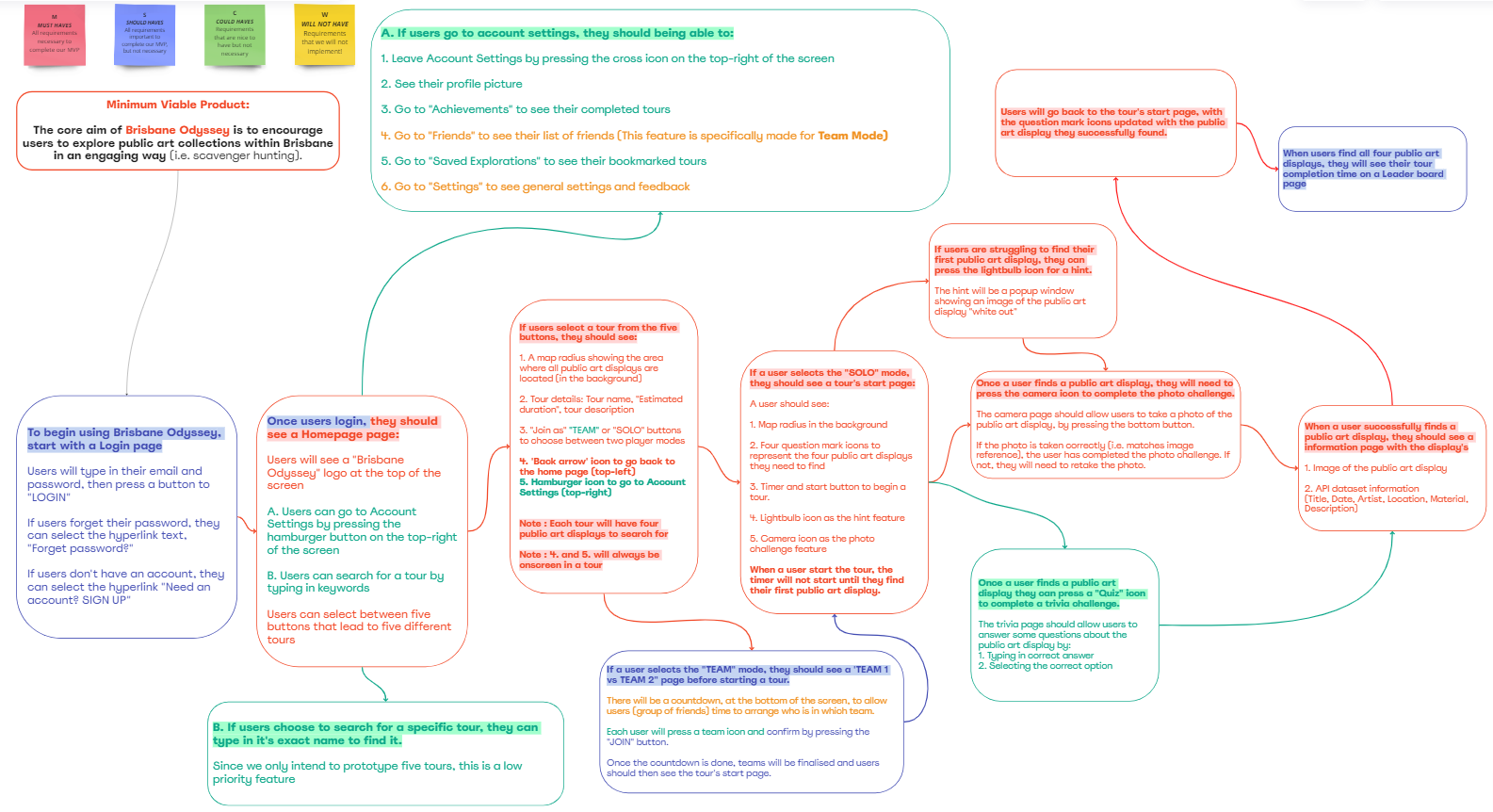
Brisbane Odyssey aims to address these pain points by offering a user-friendly mobile web application that presents curated tours of Brisbane's public art collection. Users will have the flexibility to choose from a selection of thematic tours, each highlighting specific art displays within the city. Upon selecting a tour, users will embark on a self-guided journey, navigating various art installations while completing photo challenges and interactive tasks along the way. By incorporating elements of gamification and exploration, the application seeks to transform the act of discovering public art into an enjoyable and rewarding experience.
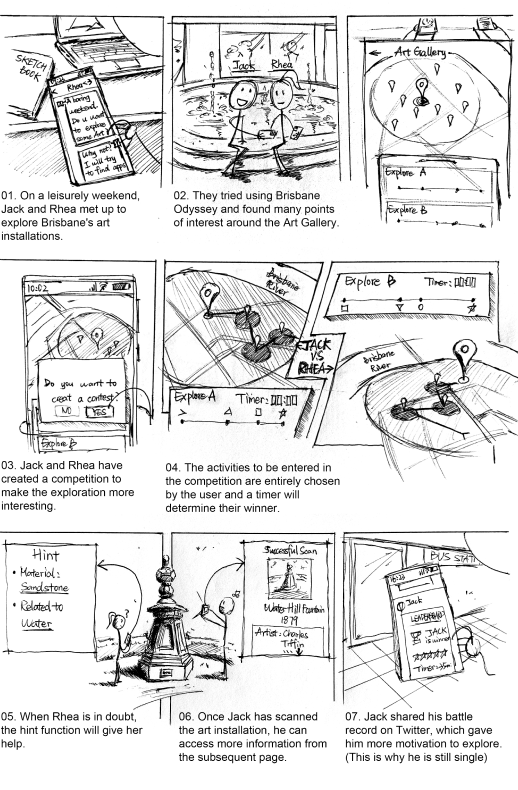
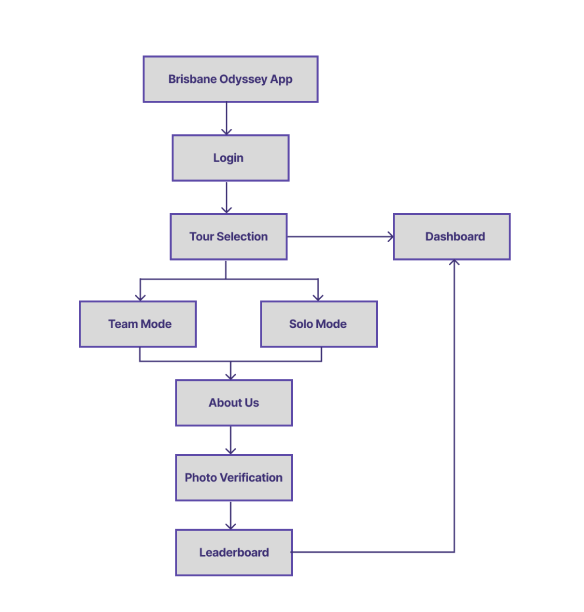
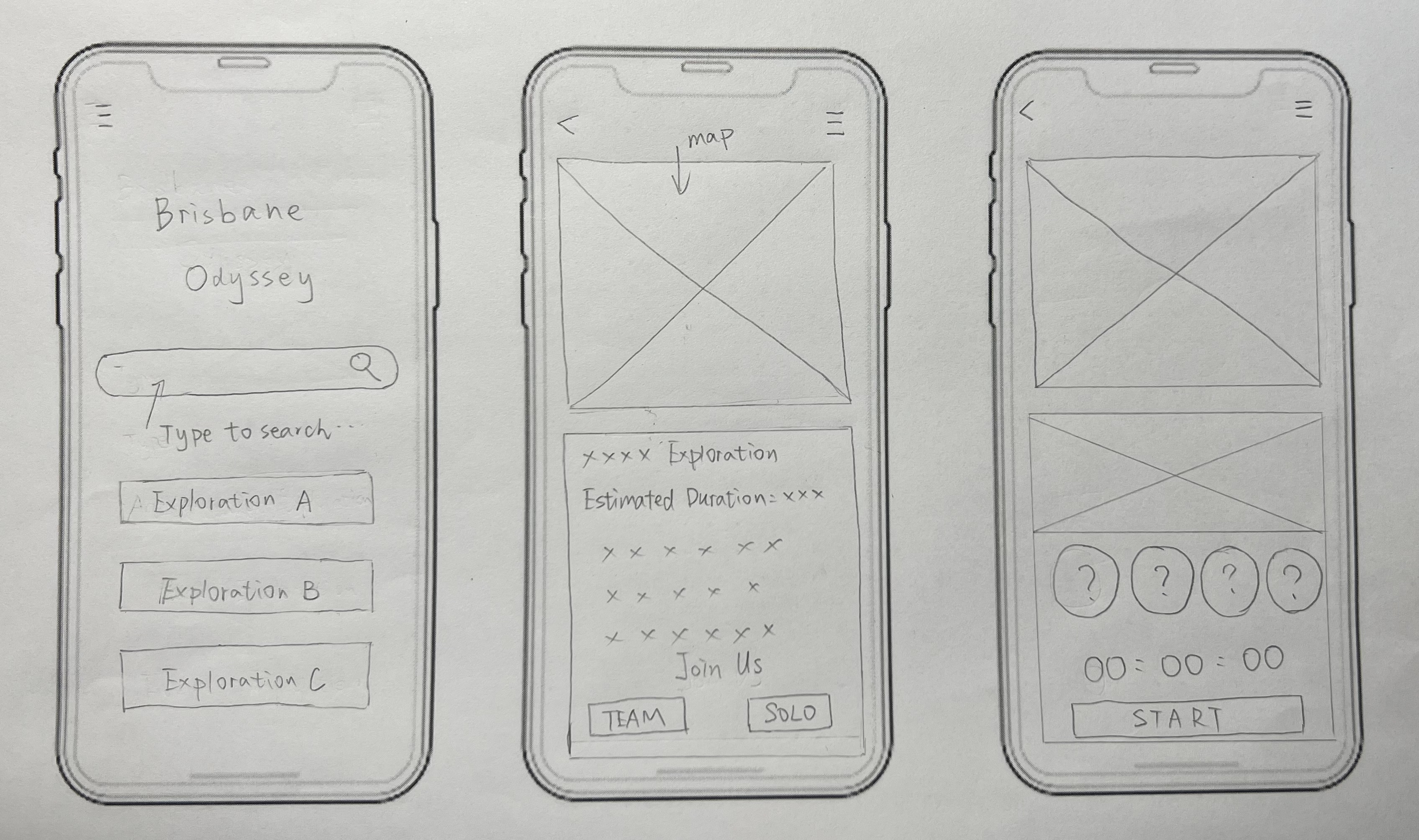
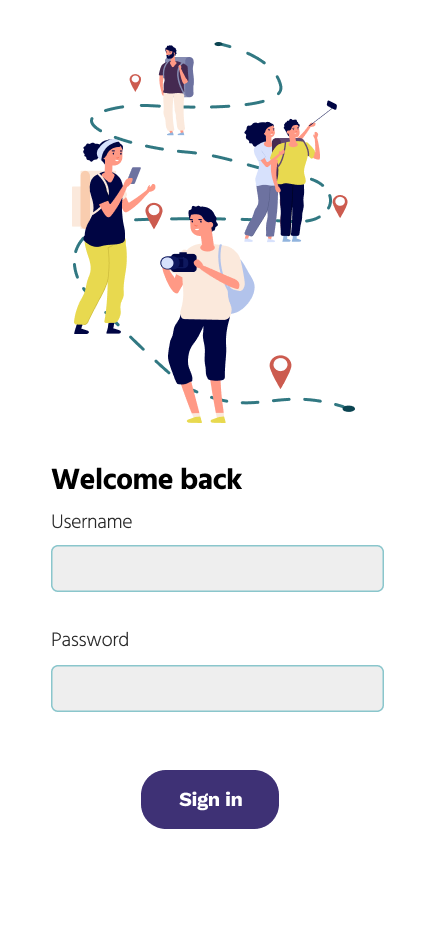
1.Home Page: Landing page for users to choose a recommended route for exploring art installations.
2.Route Details Page: Provides users with essential route information, including installation locations, estimated time, and installation features.
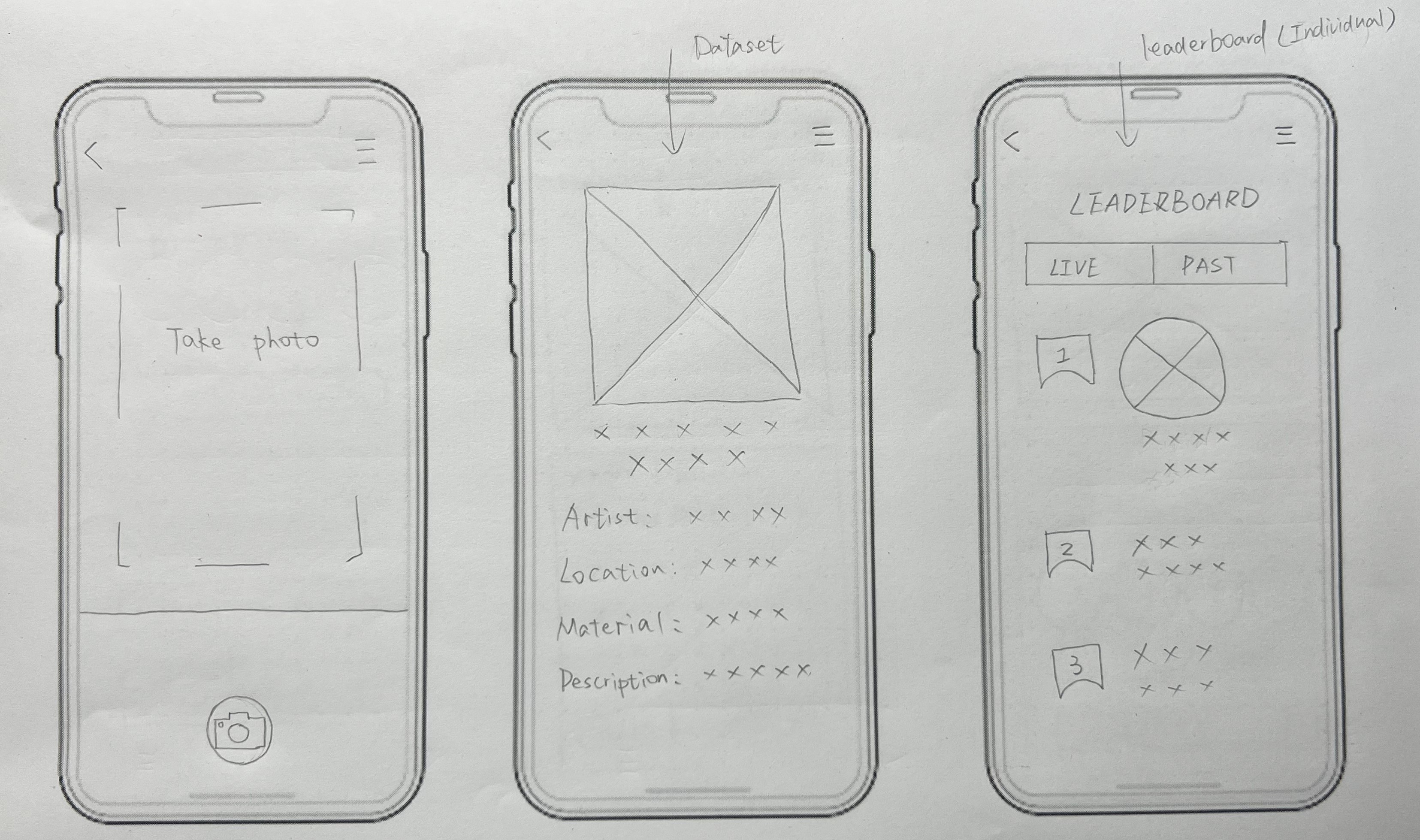
3.Photo Verification Challenge: Users initiate a challenge by locating each public art display and capturing a photo using the camera icon. Successful photo verification grants automatic access to installation details.
4.Leaderboard: Timer stops when all public art displays in the route are located. Users' completion times are recorded on the leaderboard for comparison.
people who are both interested in learning about public art displays and enjoy physically exploring the different places in Brisbane City Council areas.
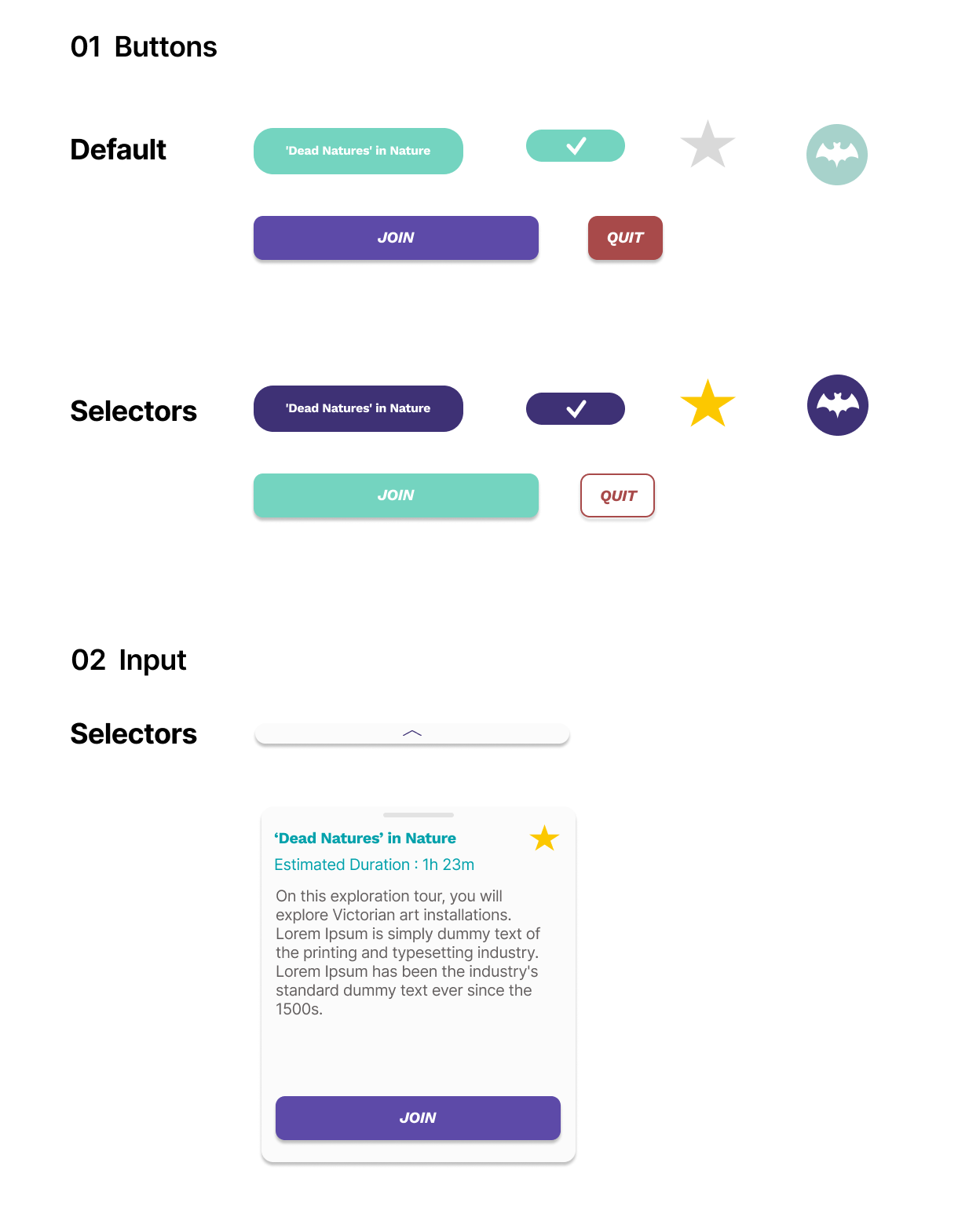
During the evaluation phase of the project, we chose the method of think-aloud and interview to test the project. Through this process, we gathered valuable feedback that informed several significant points of improvement:
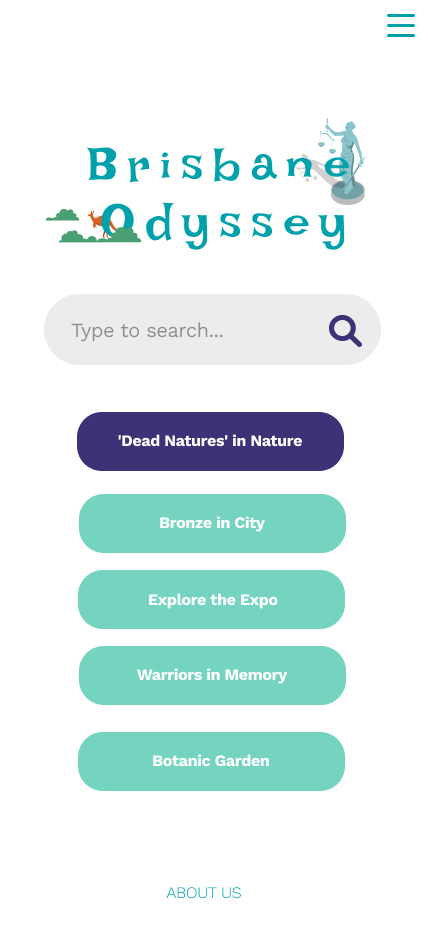
Choose from a curated selection of recommended tours or search for specific themes or locations that pique your interest.
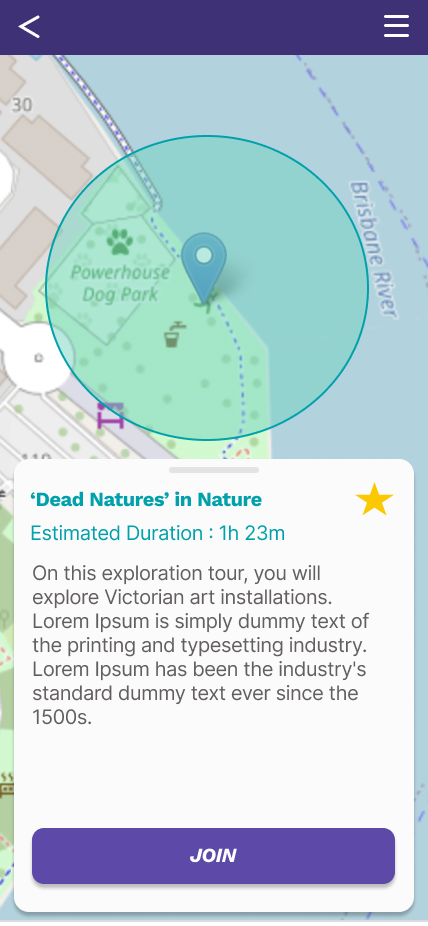
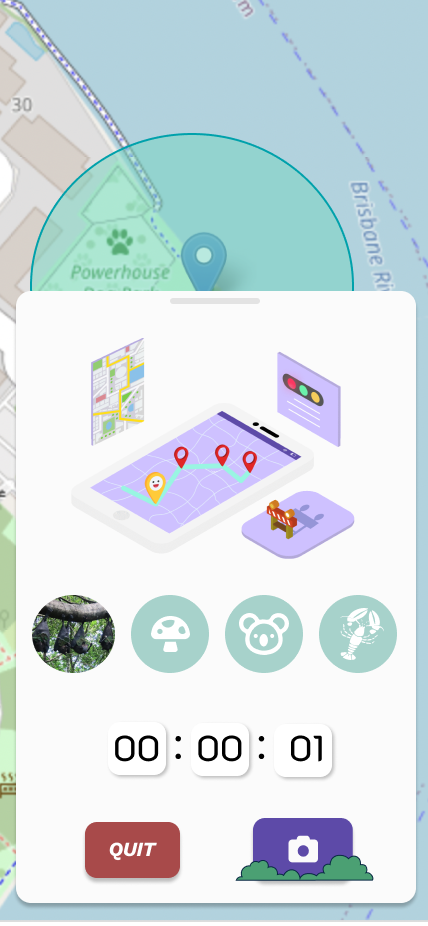
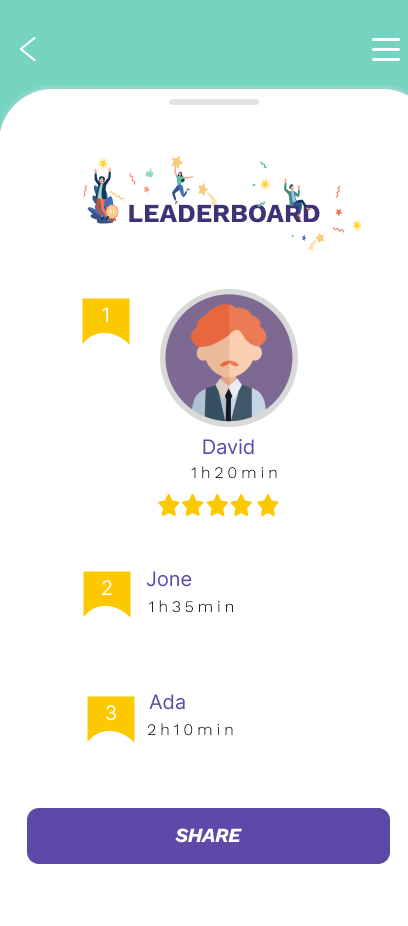
Importance of Simple Navigation: Simple and intuitive navigation is crucial for ensuring ease of use and enhancing user satisfaction.
Value of Flexibility: Recognizing the diverse needs and preferences of our user base, flexibility emerged as a key consideration in our design approach. By offering customizable options and adaptable features, we cater to a wide range of user preferences and ensure inclusivity across various demographics.
Impact of Gamification: Incorporating gamification elements proved to be a powerful strategy for increasing user engagement and retention.
More gamification elements: Introduce additional gamification features such as achievement badges, level progression, and rewards to enhance user engagement and motivation.
Iterative development: Utilize a variety of user testing methods, including surveys, interviews, and usability testing, to evaluate programs in-depth and gather comprehensive feedback for continuous improvement.
Appeal and engagement:Design appealing and engaging elements for users, including visually stunning artwork showcases, interactive challenges, and personalized user profiles.